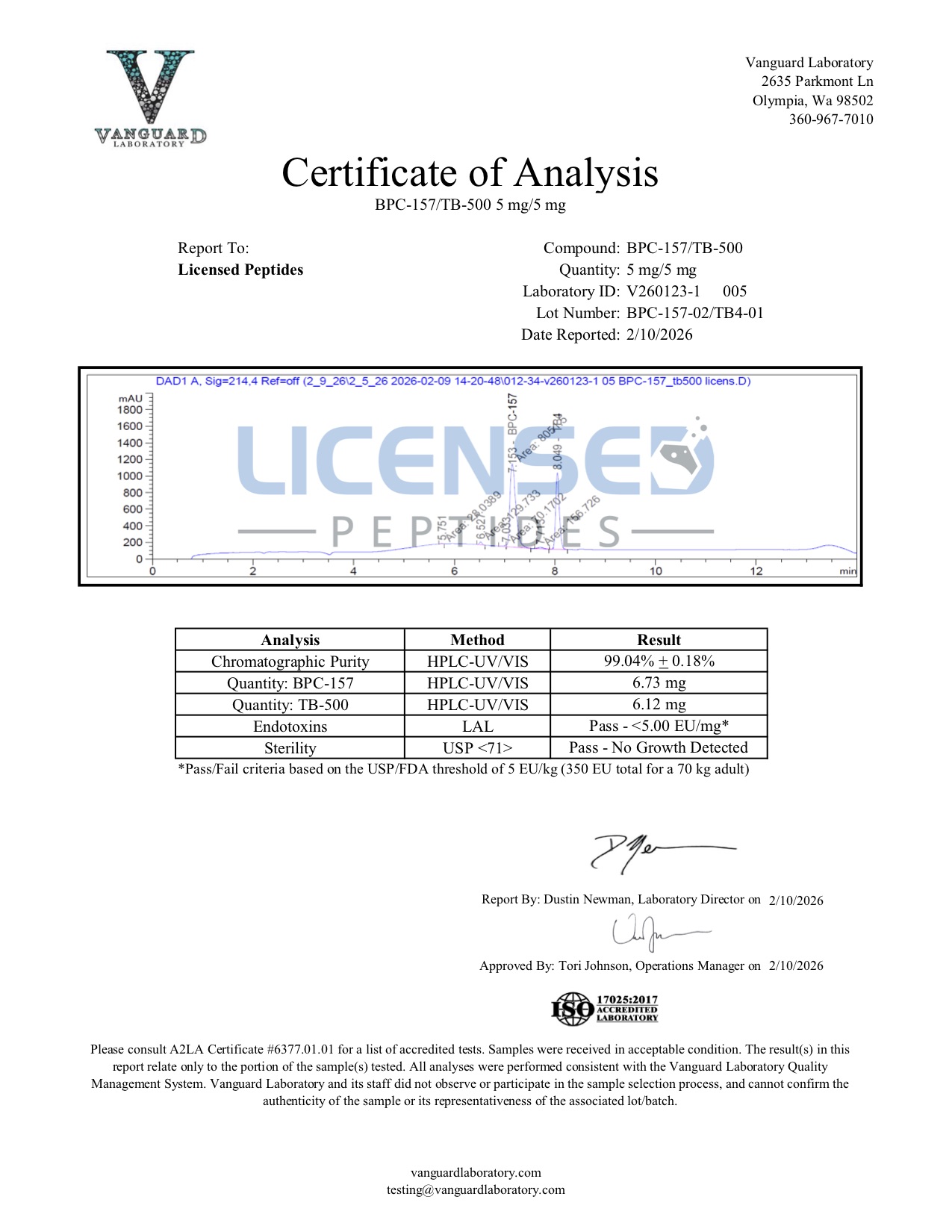
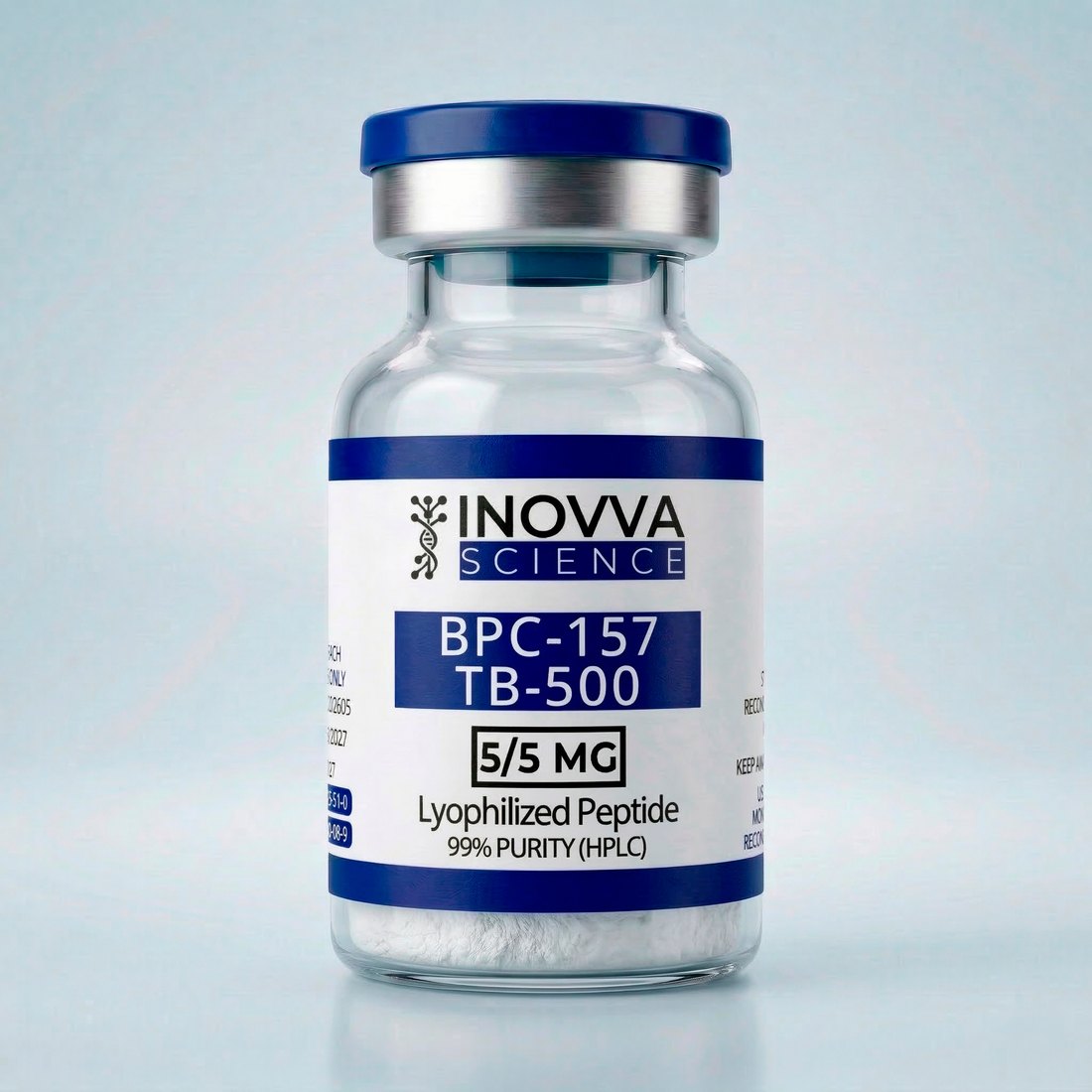
BPC-157 + TB-500
Research peptide · Lyophilized vial 10 mg · 99% HPLC purity
Our most requested recovery blend: two peptides studied for their complementary roles in tissue repair and angiogenesis.
A combination of BPC-157 (a gastric pentadecapeptide) and TB-500 (a thymosin β4 fragment), two peptides widely studied in tissue-repair models. Their complementary action on angiogenesis, cell migration, and connective-tissue remodeling is investigated in recovery processes.
Benefits studied in research
- Studied in models of tissue repair and soft-tissue wound healing.
- Investigated for its role in angiogenesis and the formation of new blood vessels.
- Evaluated for its effect on musculotendinous recovery processes in preclinical models.
- TB-500 (a thymosin β4 fragment) studied for accelerating re-epithelialization and collagen deposition in cutaneous wound models.
Key data
- Composition
- BPC-157 + TB-500 (blend)
- Research focus
- Tissue repair · angiogenesis
- TB-500
- Thymosin β4 fragment
- Models
- Preclinical (soft tissue, tendon, skin)
- Storage
- −20 °C lyophilized · 4 °C reconstituted
Scientific backing
Peer-reviewed publications on the molecule. Research references, not indications for use.
Reconstitution calculator
Adjust the values to plan your protocol. The vial's mg sync with the size you select above.
Calculation tool for laboratory planning (RUO). An insulin U-100 syringe has 100 units = 1 ml. Laboratory reference, not medical advice.
Frequently asked questions
In research, complementary mechanisms are studied: BPC-157 on angiogenesis and growth factors, TB-500 on cell migration and remodeling—hence the interest in the blend.
Yes, the 10 mg vial contains the lyophilized blend, ready to reconstitute under laboratory conditions.