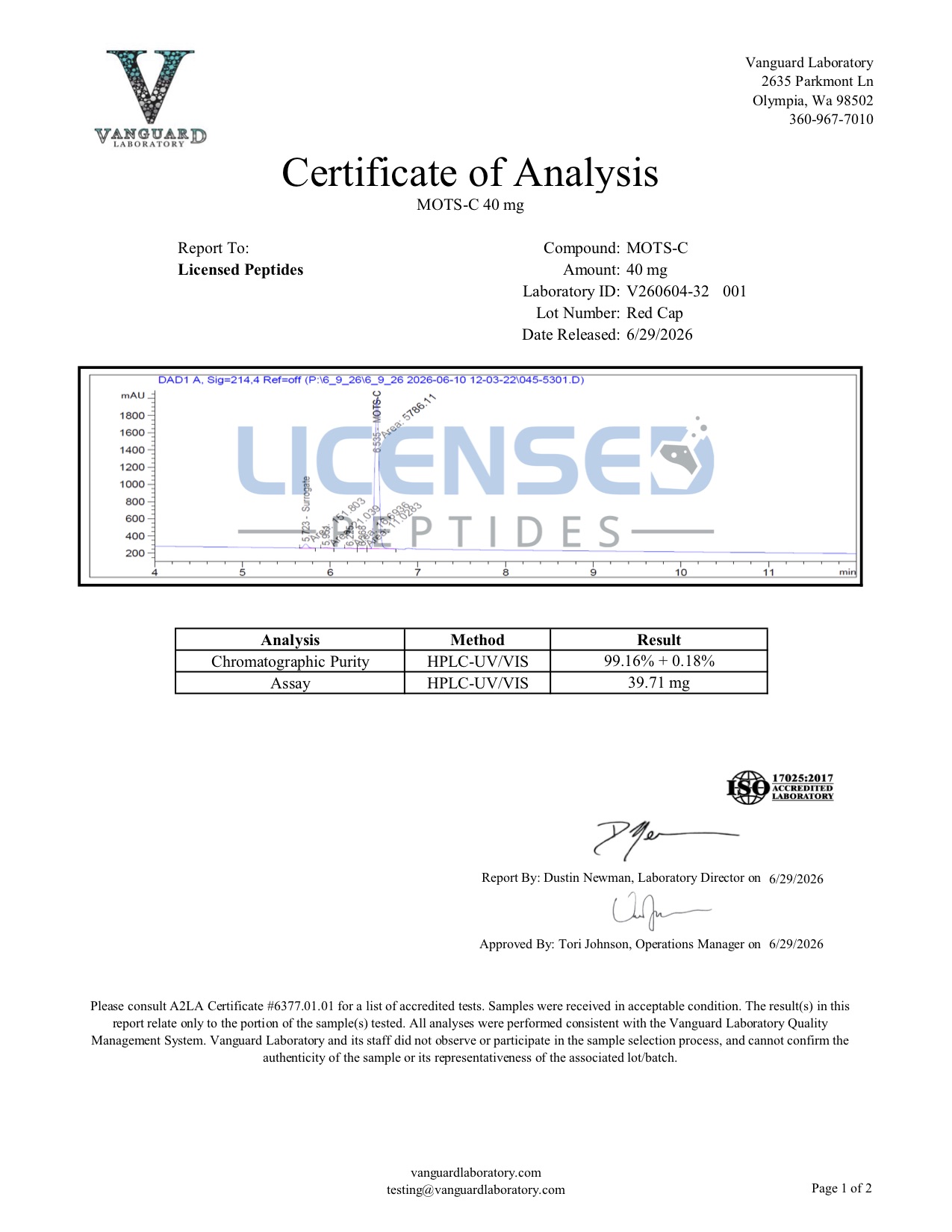
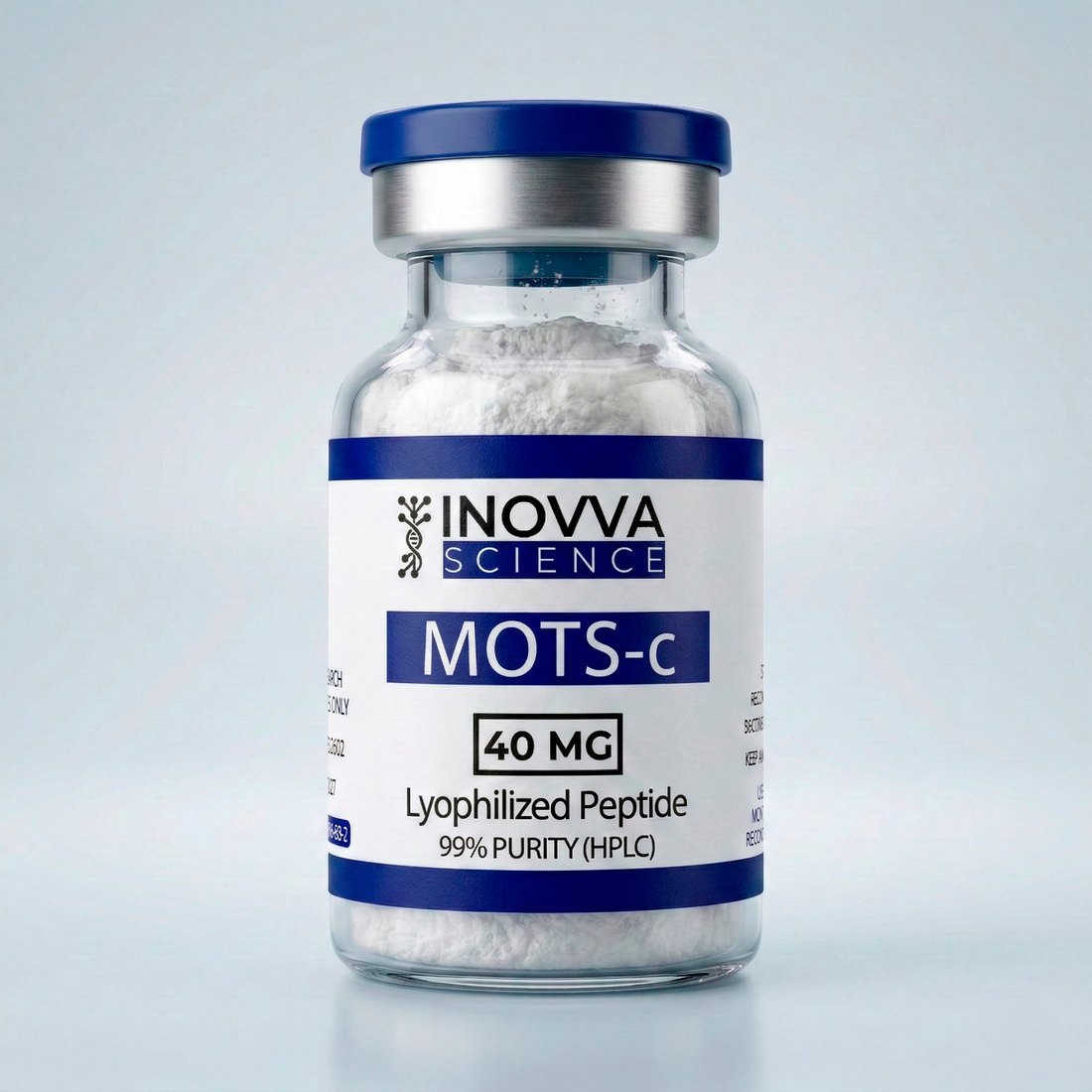
MOTS-c
Research peptide · Lyophilized vial 40 mg · 99% HPLC purity
Peptide encoded by mitochondrial DNA, studied as an "exercise mimetic" for its action on energy metabolism.
MOTS-c is a peptide encoded by mitochondrial DNA. It is studied for its role in metabolic homeostasis and exercise-related cellular signaling: in models it activates the AMPK pathway and modulates glucose and lipid metabolism, which is why it is investigated as a regulator of metabolic resilience with age.
Benefits studied in research
- Studied for its role in metabolic homeostasis and the regulation of insulin sensitivity in preclinical models.
- Investigated for its involvement in cellular signaling associated with physical exercise.
- Evaluated for its effect on mitochondrial function and energy metabolism.
- Studied as an exercise mimetic: in animal models it activates the AMPK pathway and modulates glucose and lipid metabolism.
Key data
- Class
- Mitochondrial-derived peptide (MDP)
- Pathway
- AMPK · metabolic homeostasis
- Research focus
- Exercise mimetic · insulin sensitivity
- Models
- Preclinical (cellular and animal)
- Storage
- −20 °C lyophilized · 4 °C reconstituted
Scientific backing
Peer-reviewed publications on the molecule. Research references, not indications for use.
Reconstitution calculator
Adjust the values to plan your protocol. The vial's mg sync with the size you select above.
Calculation tool for laboratory planning (RUO). An insulin U-100 syringe has 100 units = 1 ml. Laboratory reference, not medical advice.
Frequently asked questions
In animal models it activates pathways (such as AMPK) that are also activated by physical exercise, which is why there is interest in studying it within performance and metabolism research.
It is encoded by human mitochondrial DNA itself; the research material is a high-purity synthetic version of the same peptide.