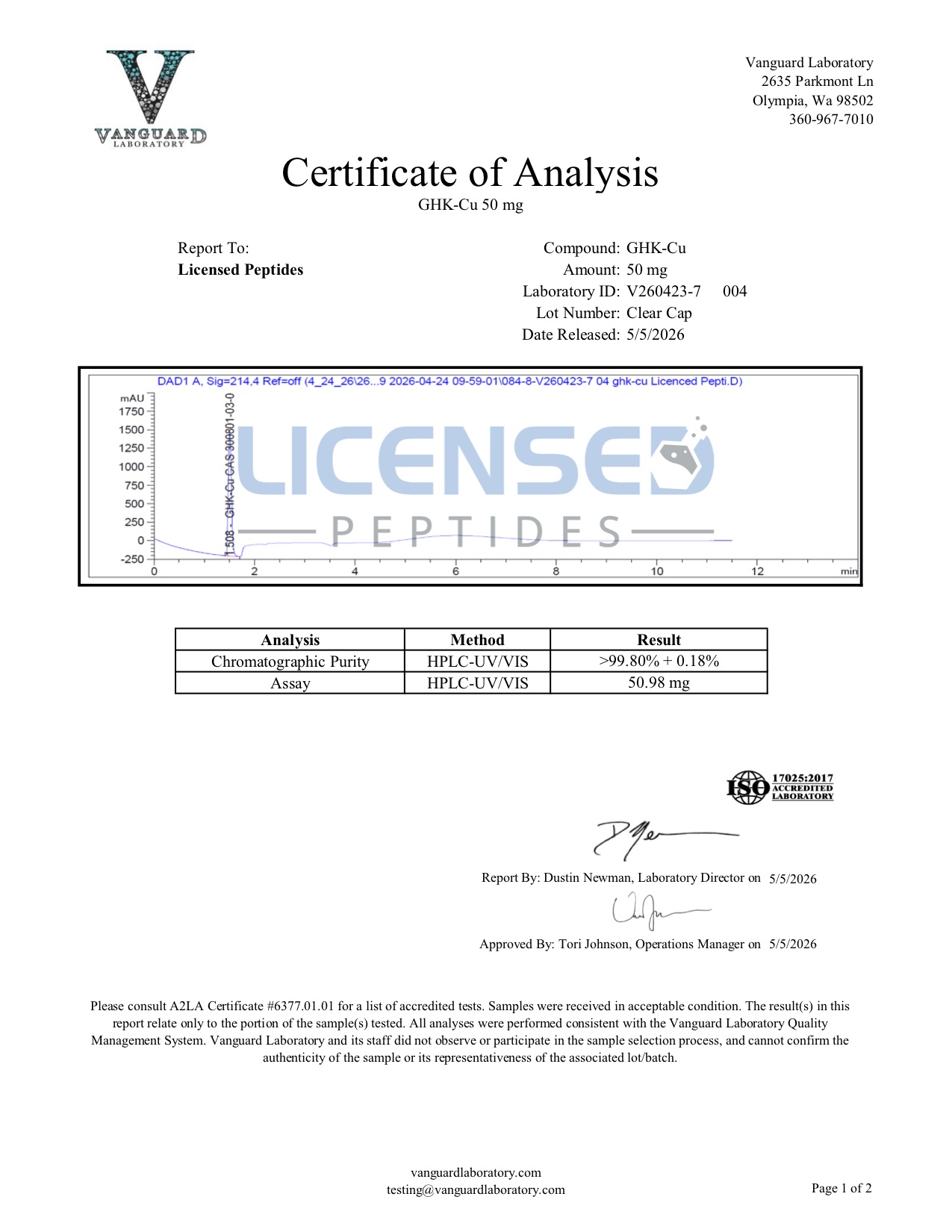
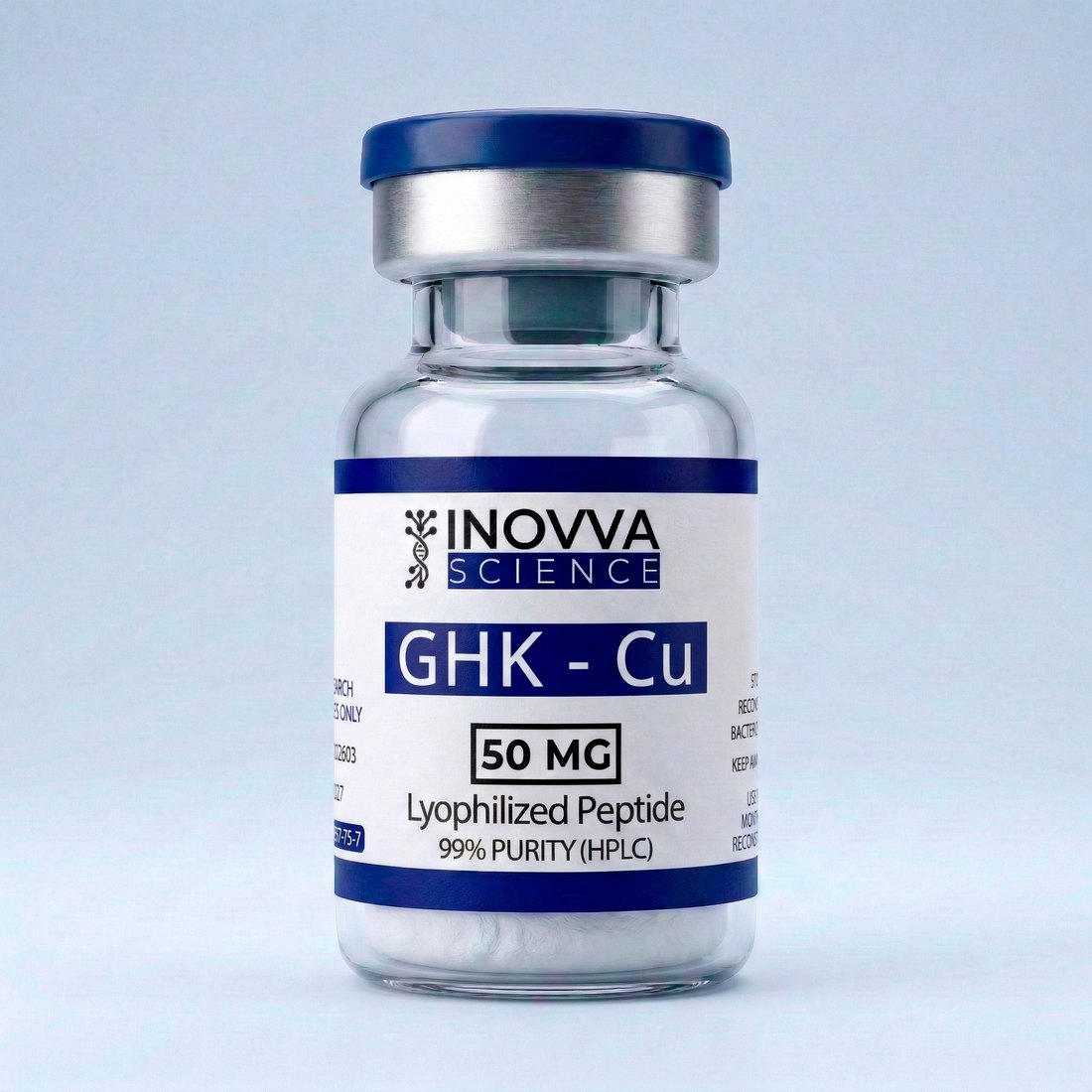
GHK-Cu
Research peptide · Lyophilized vial 50 mg · 99% HPLC purity
Copper tripeptide studied for skin regeneration and extracellular matrix remodeling.
Copper tripeptide complex (glycyl-L-histidyl-L-lysine·Cu). Investigated in models of extracellular matrix remodeling and tissue signaling: it modulates the expression of repair-associated genes, acts as a copper transporter, and shows antioxidant and anti-inflammatory activity in skin regeneration studies.
Benefits studied in research
- Studied in models of extracellular matrix remodeling and collagen synthesis.
- Investigated for its role in tissue signaling and skin regenerative processes.
- Evaluated for its activity on gene expression associated with tissue repair.
- Studied for its antioxidant and anti-inflammatory activity, and as a copper transporter in skin regeneration pathways.
Key data
- Class
- Copper tripeptide (GHK-Cu)
- Sequence
- Gly-L-His-L-Lys · Cu²⁺
- Research focus
- Collagen · extracellular matrix · skin
- Properties
- Antioxidant and anti-inflammatory (models)
- Storage
- −20 °C lyophilized · 4 °C reconstituted
Scientific backing
Peer-reviewed publications on the molecule. Research references, not indications for use.
Reconstitution calculator
Adjust the values to plan your protocol. The vial's mg sync with the size you select above.
Calculation tool for laboratory planning (RUO). An insulin U-100 syringe has 100 units = 1 ml. Laboratory reference, not medical advice.
Frequently asked questions
Copper (Cu²⁺) is part of the active complex and is studied as a cofactor in the tissue regeneration and remodeling pathways in which the peptide participates.
Skin is the most studied model, but its role in extracellular matrix remodeling in other tissues is also under investigation.