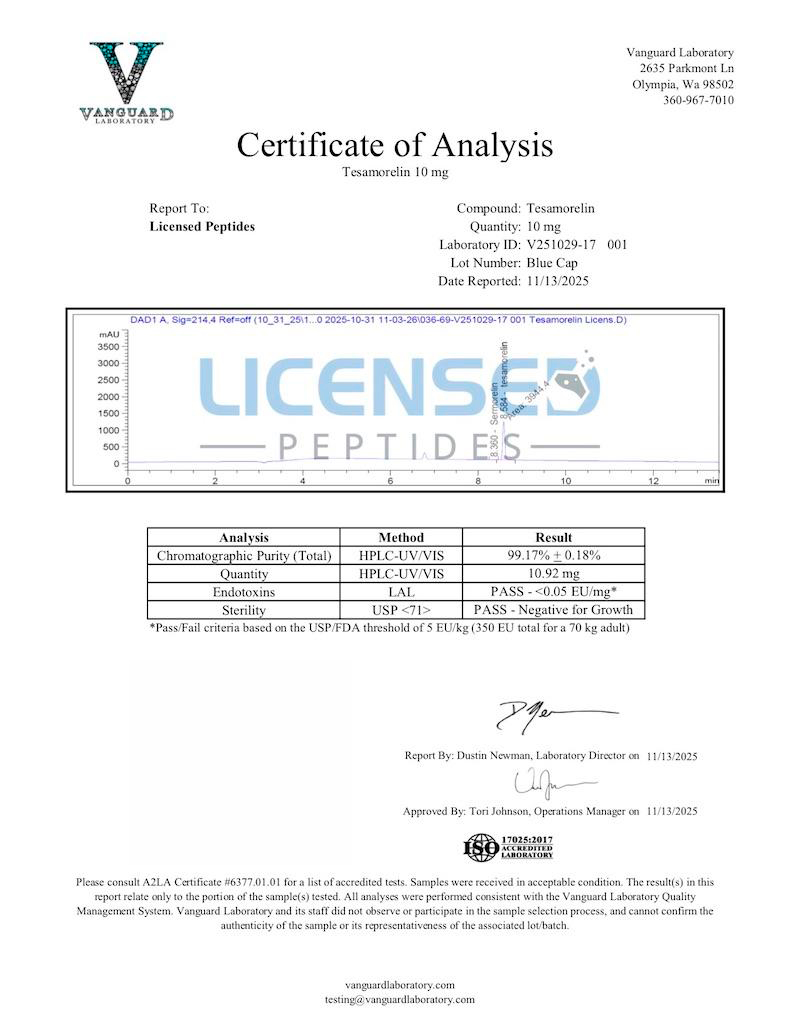
Tesamorelin
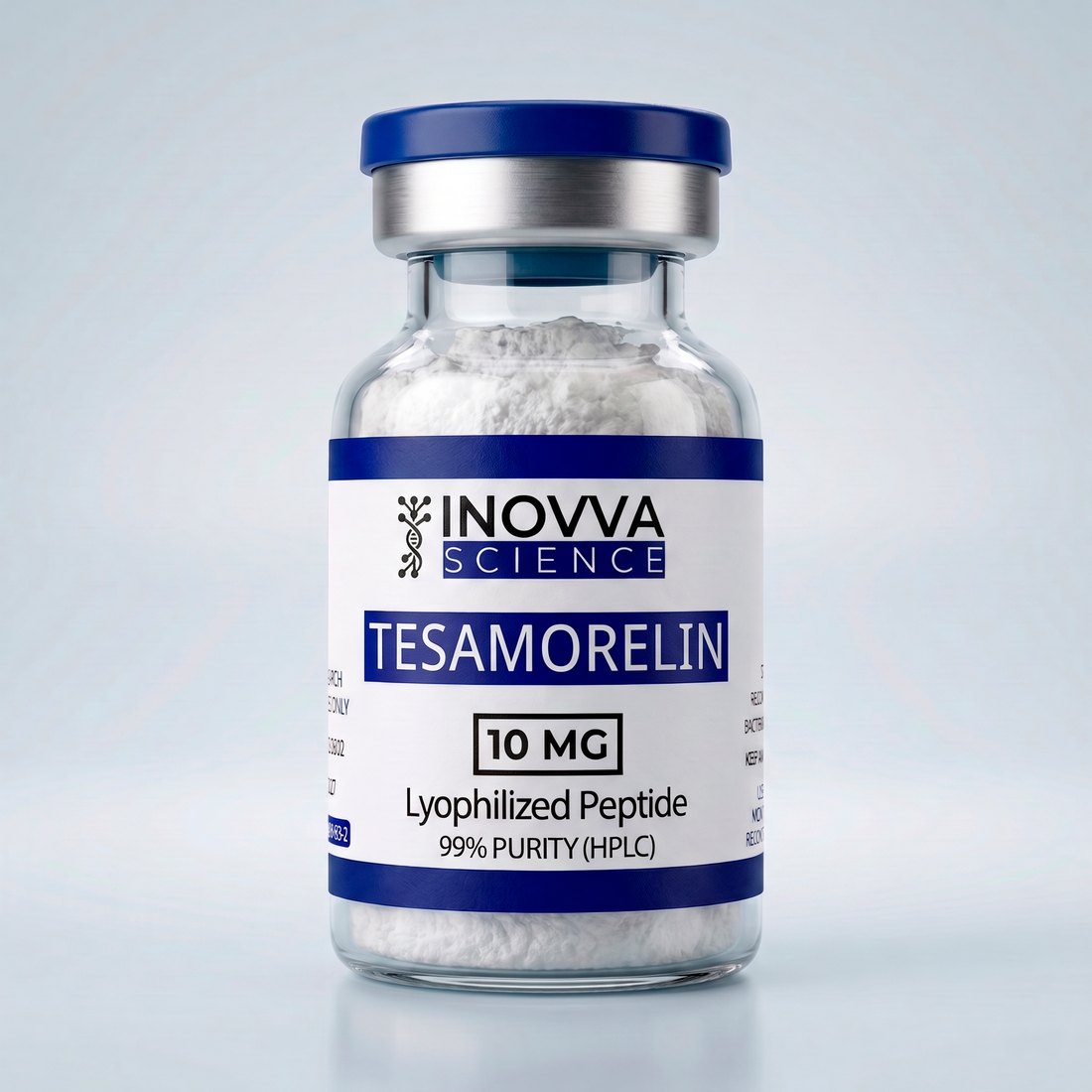
Research peptide · Lyophilized vial 10 mg · 99% HPLC purity
Stabilized GHRH analog studied for raising endogenous growth hormone and mobilizing visceral fat.
Tesamorelin is a stabilized synthetic analog of growth hormone-releasing factor (GHRH). It stimulates pulsatile endogenous growth hormone secretion—preserving its physiological rhythm—which in research has been associated with mobilization of visceral adipose tissue and changes in the GH/IGF-1 axis.
Benefits studied in research
- Studied for its effect on visceral adipose tissue (VAT) reduction, with mean decreases of ~15% versus placebo in a 26-week trial.
- Investigated for its association with improvements in the lipid profile, including reduced triglycerides.
- Evaluated for its effect on liver fat reduction in research on abdominal adiposity.
- Analyzed for raising IGF-1 levels as a readout of the GH/IGF-1 axis, a key biomarker in endocrine studies.
Key data
- Class
- GHRH analog
- Target
- GHRH receptor (pituitary)
- Marker
- Endogenous GH · IGF-1
- Under study
- ~15% visceral fat reduction (26 wks)
- Storage
- −20 °C lyophilized · 4 °C reconstituted
Scientific backing
Peer-reviewed publications on the molecule. Research references, not indications for use.
Reconstitution calculator
Adjust the values to plan your protocol. The vial's mg sync with the size you select above.
Calculation tool for laboratory planning (RUO). An insulin U-100 syringe has 100 units = 1 ml. Laboratory reference, not medical advice.
Frequently asked questions
By stimulating endogenous GH in a pulsatile fashion, it is investigated within the same framework as other secretagogues in the recovery and body-composition line.
Tesamorelin acts only on the GHRH receptor; blends such as Ipamorelin + CJC-1295 pair a ghrelin secretagogue with a GHRH analog to study a synergistic effect on pulsatility.