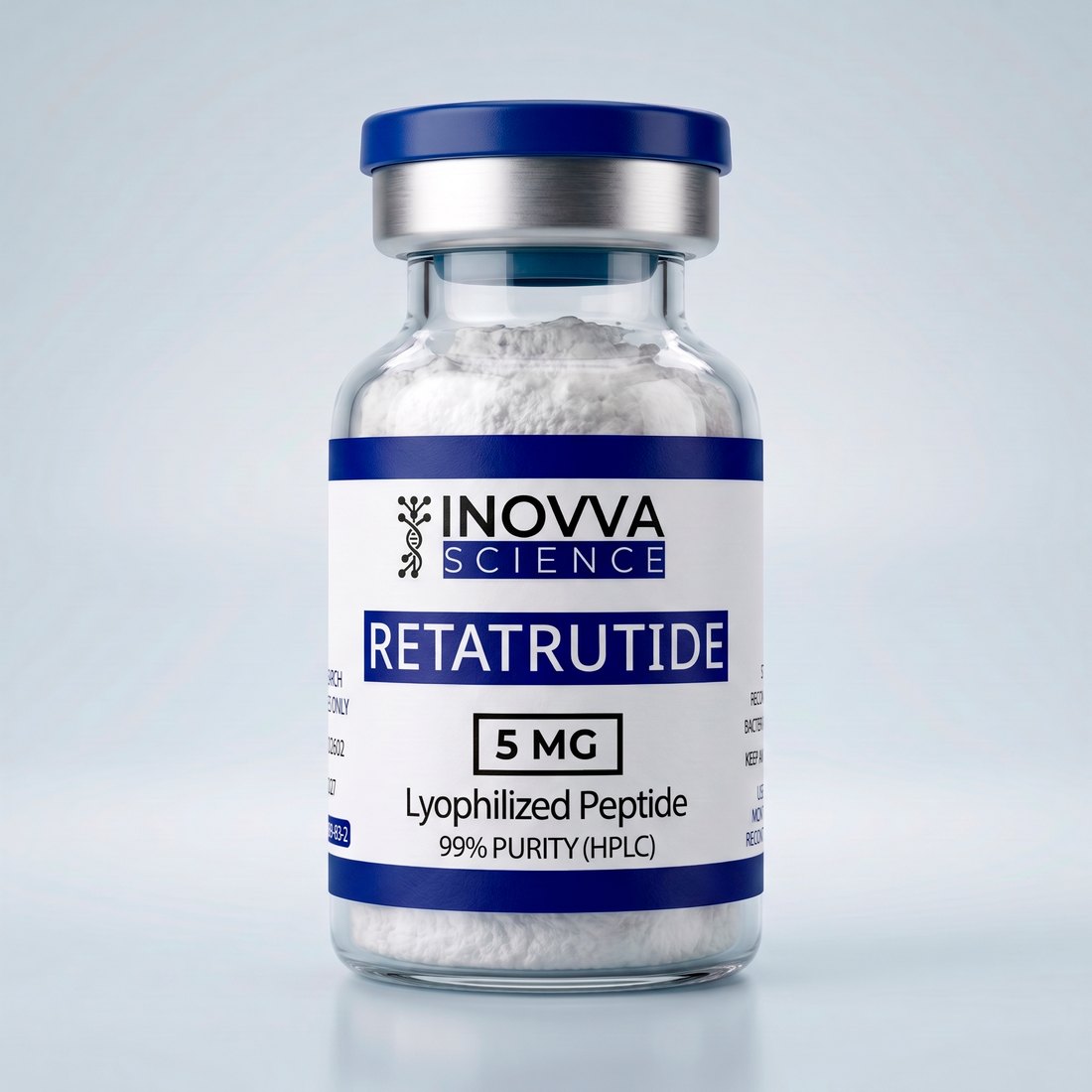
Retatrutide
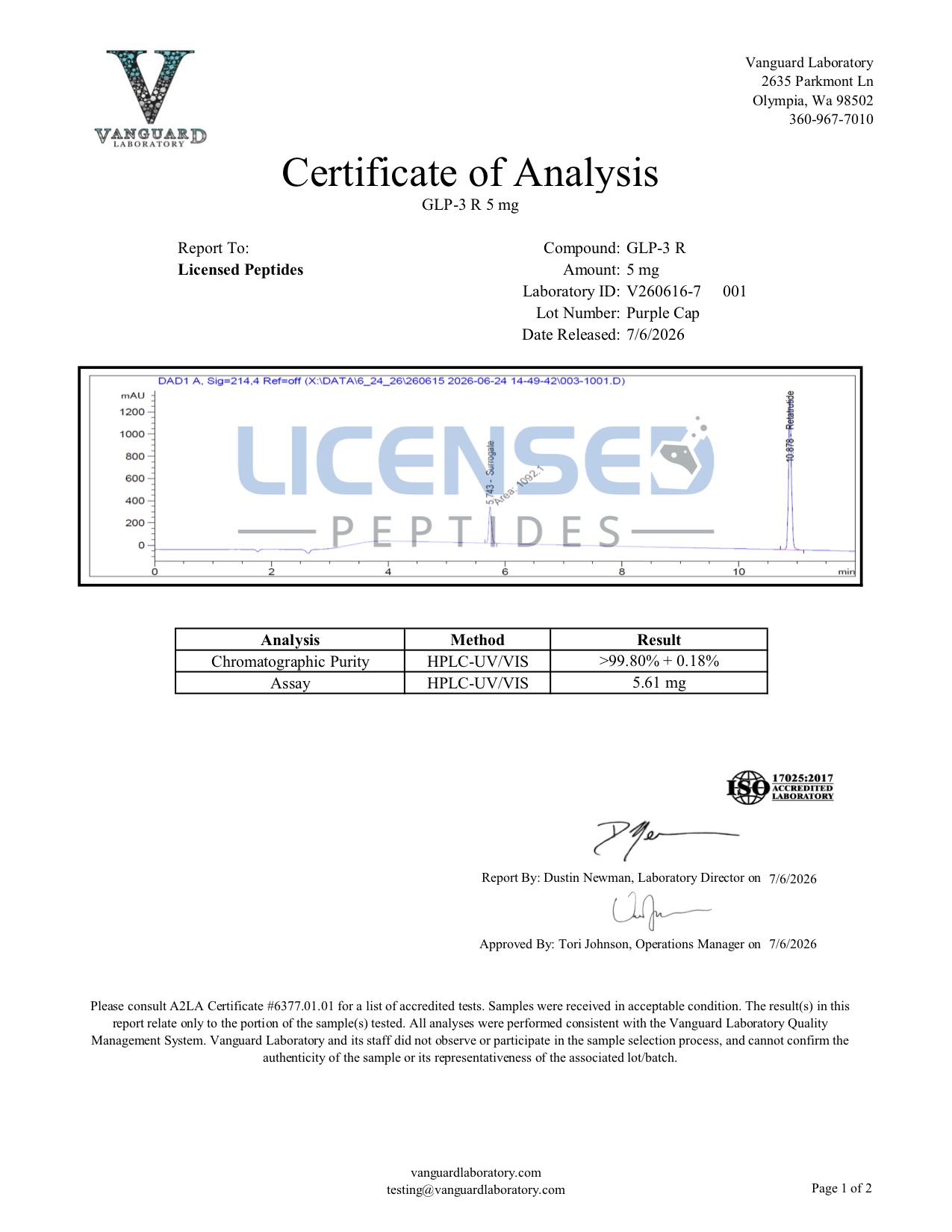
Research peptide · Lyophilized vial 5, 15 & 30 mg · 99% HPLC purity
The most advanced triple agonist in metabolic research: it simultaneously activates three receptors central to appetite and energy expenditure.
Retatrutide (LY3437943) is a triple agonist of the GIP, GLP-1, and glucagon receptors. This combined action modulates satiety, glucose-dependent insulin secretion, and energy expenditure, and is why it is being studied as the next generation of incretin molecules relative to single and dual agonists.
Benefits studied in research
- Studied for its effect on body-weight reduction, with mean decreases of up to ~17.5% at 24 weeks in a phase 2 trial in adults with obesity.
- Investigated for its dose-dependent action, reaching weight reductions of ≥15% in a high proportion of participants at 48 weeks.
- Evaluated for its effect on the reduction of hepatic fat content in a phase 2a trial in metabolic steatosis (MASLD).
- Analyzed for its impact on glycemic and lipid parameters in the context of experimental metabolic control.
Key data
- Class
- Peptide triple agonist
- Targets
- GIP · GLP-1 · Glucagon
- Status
- Phase 3 (clinical research)
- Weight reduction under study
- Up to ~24% at 48 wks (phase 2)
- Storage
- −20 °C lyophilized · 4 °C reconstituted
Scientific backing
Peer-reviewed publications on the molecule. Research references, not indications for use.
Reconstitution calculator
Adjust the values to plan your protocol. The vial's mg sync with the size you select above.
Calculation tool for laboratory planning (RUO). An insulin U-100 syringe has 100 units = 1 ml. Laboratory reference, not medical advice.
Frequently asked questions
Beyond the GLP-1 receptor, it also activates GIP and glucagon. In research, this triple action is associated with greater energy expenditure and weight reductions higher than those observed with single or dual agonists.
These are the sizes most commonly used in escalating-dose research protocols. The vial amount does not represent a dosing recommendation.