NAD+
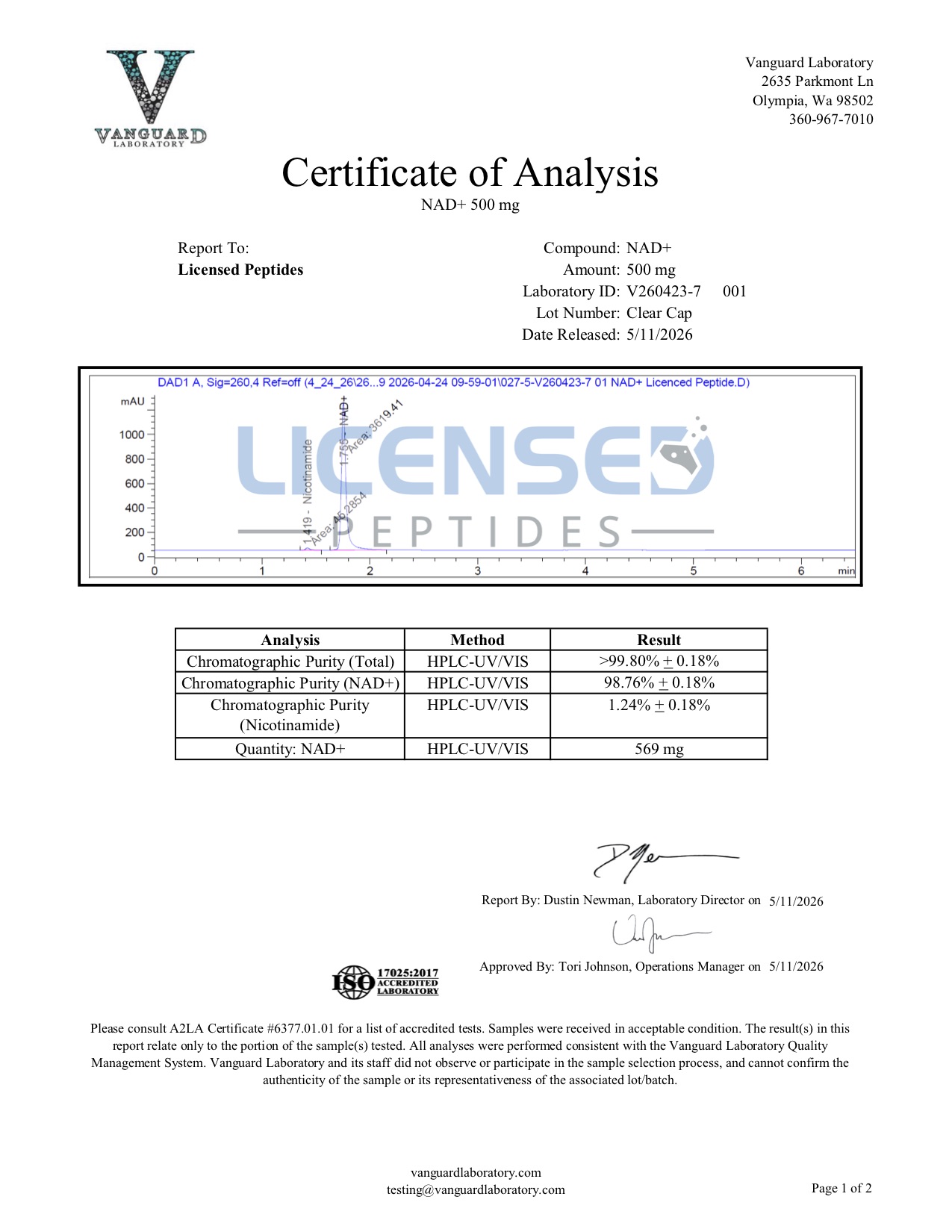
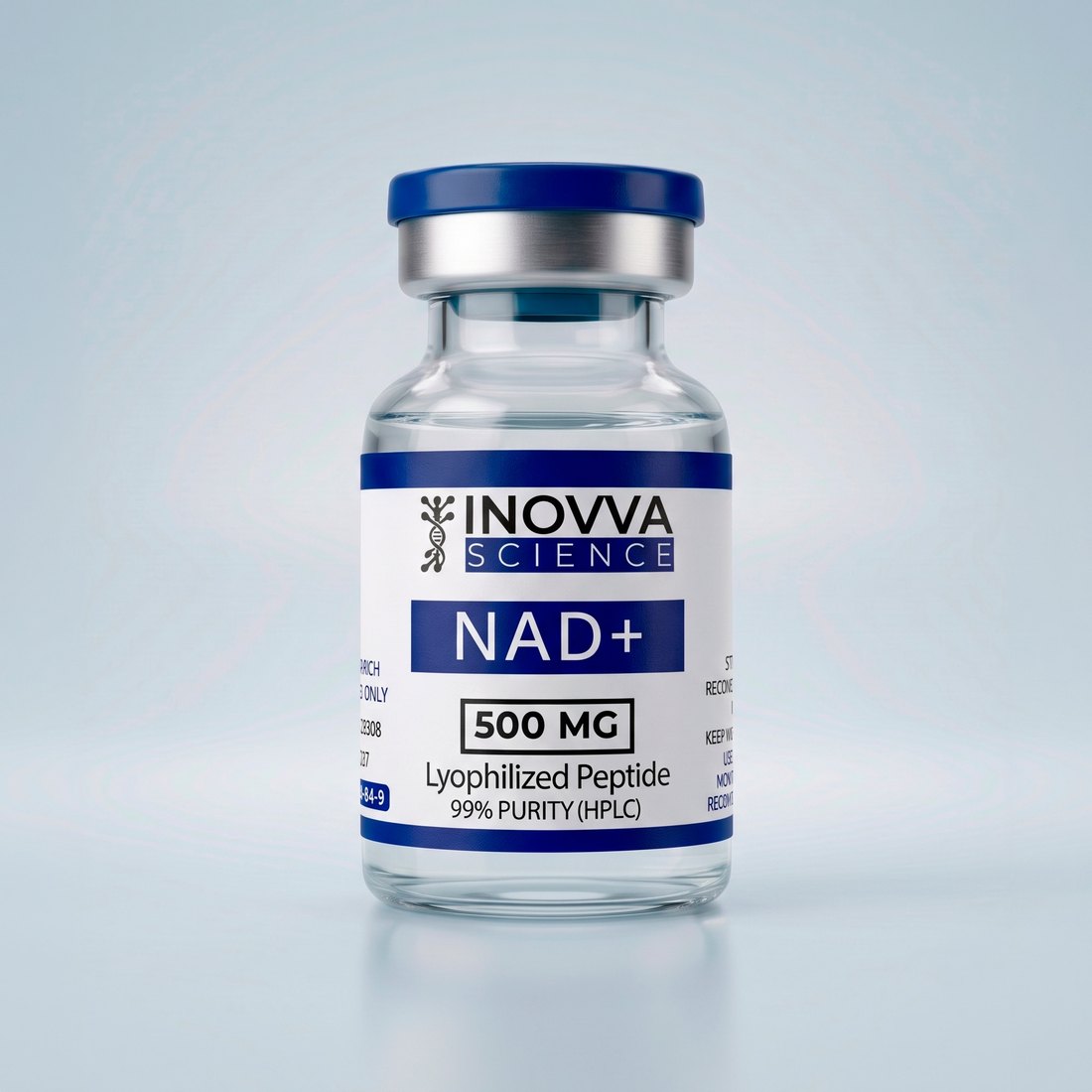
Research peptide · Lyophilized vial 500 mg · 99% HPLC purity
The central coenzyme of energy metabolism, investigated as a hub of longevity and mitochondrial function.
A dinucleotide coenzyme (NAD+) essential for cellular energy production (ATP), sirtuin activation, and DNA repair. Its levels decline with age, so it is investigated—alongside precursors such as NMN and NR—in models of aging, mitochondrial function, and cellular metabolism.
Benefits studied in research
- Investigated for its central role in cellular energy metabolism and ATP production.
- Studied for the activation of sirtuins, enzymes associated with longevity and DNA repair.
- Evaluated in models of aging and mitochondrial function decline.
- In a controlled clinical trial, supplementation with the precursor NMN improved muscle insulin sensitivity in prediabetic women.
Key data
- Class
- Coenzyme (dinucleotide)
- Pathways
- ATP · sirtuins · DNA repair
- Research focus
- Aging · mitochondrial function
- Related to
- NMN / NR precursors
- Storage
- −20 °C lyophilized · 4 °C reconstituted
Scientific backing
Peer-reviewed publications on the molecule. Research references, not indications for use.
Reconstitution calculator
Adjust the values to plan your protocol. The vial's mg sync with the size you select above.
That draw falls below one syringe unit, the finest mark you can read. Reconstitute the vial with more water: the volume per dose will grow and become measurable.
Calculation tool for laboratory planning (RUO). An insulin U-100 syringe has 100 units = 1 ml. Laboratory reference, not medical advice.
Frequently asked questions
NMN and NR are precursors that the cell converts into NAD+. Research studies both NAD+ itself and its precursors as strategies to sustain its levels.
NAD+ levels fall with age and are involved in pathways (sirtuins, DNA repair) that are heavily studied in the field of aging.