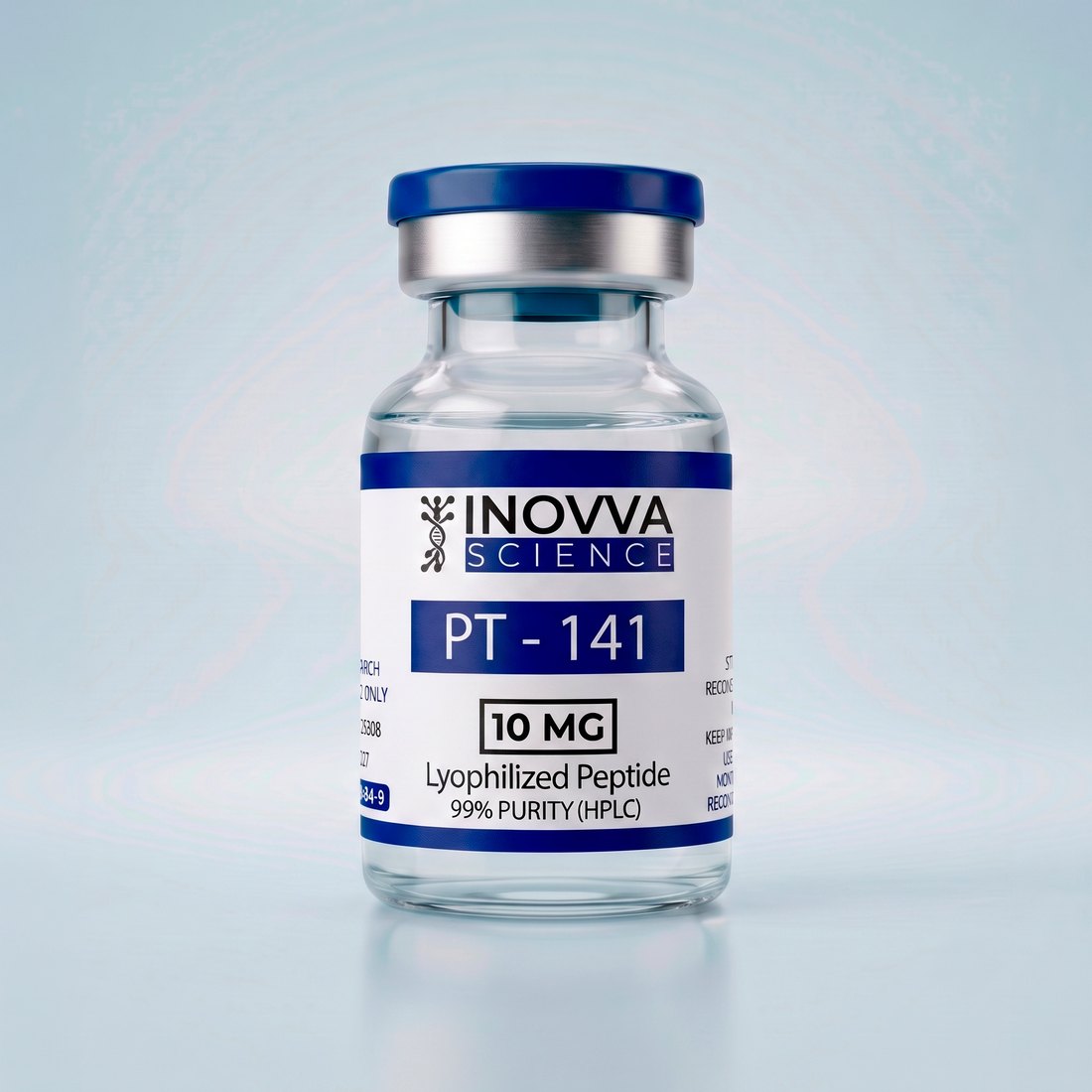
PT-141
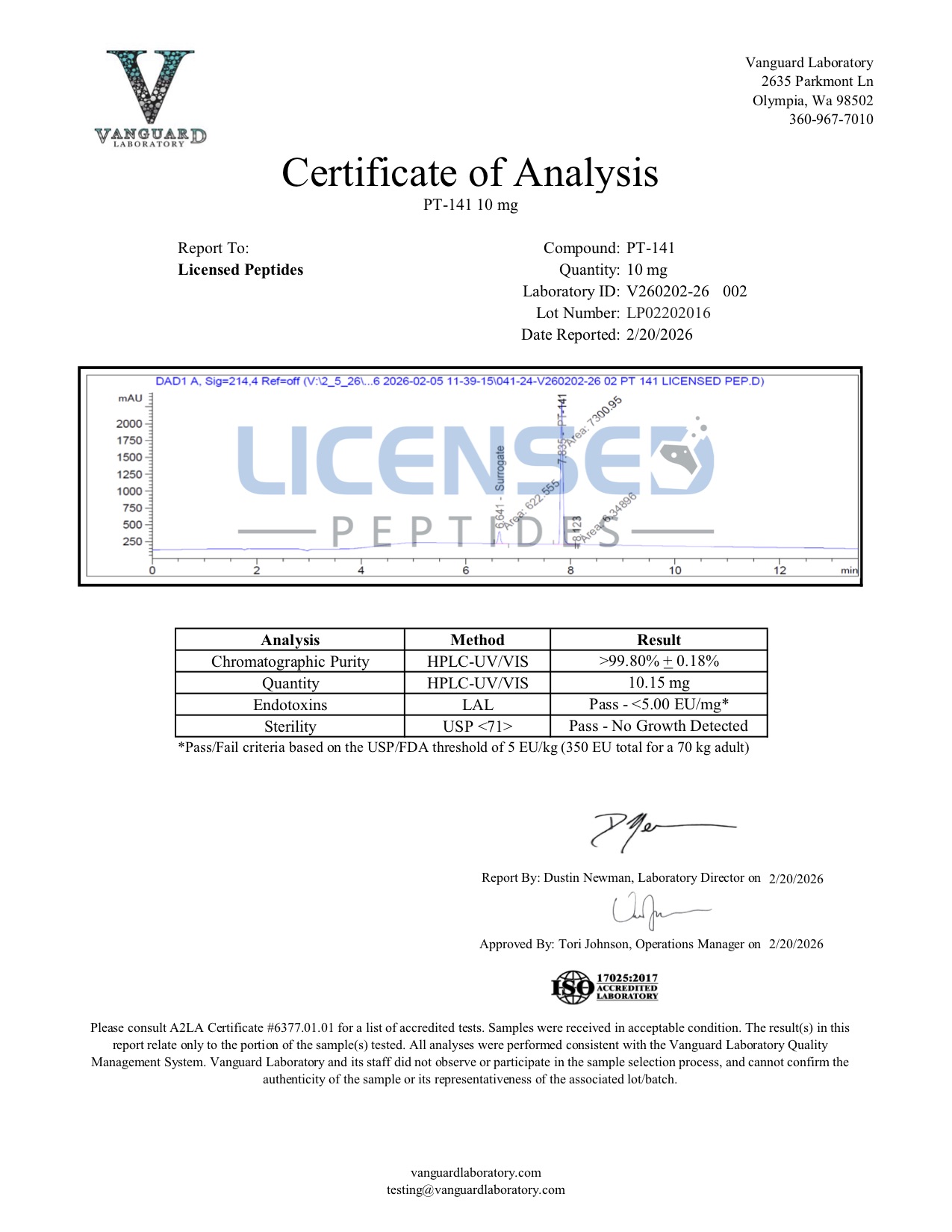
Research peptide · Lyophilized vial 10 mg · 99% HPLC purity
A centrally acting melanocortin agonist: a uniquely non-hormonal mechanism in sexual-function research.
A peptide agonist of the melanocortin receptors (MC3R and MC4R) that acts within the central nervous system rather than on the vascular system. This central, non-hormonal mechanism sets it apart from other pathways studied in sexual function. Bremelanotide (marketed as a drug under the brand Vyleesi) was approved by the FDA in 2019; however, the material offered here is supplied solely as a research reference material (RUO), not as an approved pharmaceutical product.
Benefits studied in research
- Studied for its central action on the MC3R and MC4R melanocortin receptors.
- Investigated for its role in the neural pathways associated with sexual desire.
- In phase 3 trials (bremelanotide), studied for significantly increasing sexual desire scores versus placebo.
- Investigated in neuroimaging studies for the modulation of the brain's processing of sexual stimuli via MC4R agonism.
Key data
- Class
- Melanocortin agonist
- Targets
- MC3R · MC4R (CNS)
- Mechanism
- Central, non-hormonal and non-vascular
- Reference
- Bremelanotide (Vyleesi) · here RUO only
- Storage
- −20 °C lyophilized · 4 °C reconstituted
Scientific backing
Peer-reviewed publications on the molecule. Research references, not indications for use.
Reconstitution calculator
Adjust the values to plan your protocol. The vial's mg sync with the size you select above.
Calculation tool for laboratory planning (RUO). An insulin U-100 syringe has 100 units = 1 ml. Laboratory reference, not medical advice.
Frequently asked questions
It acts centrally on melanocortin receptors rather than on the vascular pathway. This is a distinct mechanism, studied in both men and women.
Bremelanotide (PT-141) was approved by the FDA in 2019 for hypoactive sexual desire disorder; here it is offered solely as research material (RUO).